Stainless steel
Stainless steel welding to drawing
TIG welding of stainless steel pipes, flanges and assemblies in our workshop in Požarevac, Serbia. Preparation, root shielding and finishing are defined by the purpose of the part.

Material specifics
Stainless steel needs clean work and heat control
The corrosion resistance of stainless steel depends on the surface condition after welding. Preparation, shielding and finishing are part of the job, not an extra.
Excessive heat input increases distortion and heat tint. Contact with tools used on carbon steel can leave iron particles that later corrode. With pipes, shielding of the root side also matters.
For stainless steel we use the TIG process with dedicated brushes and abrasives, and choose parameters according to wall thickness and joint type.
TIG welding (141) →
What we watch
Six things that make a good stainless joint
State these requirements on the drawing or in the enquiry so the quotation covers the operations needed.
Material designation
State the grade, e.g. 1.4301 (304) or 1.4404 (316L), and the wall thickness. The filler metal depends on it.
Root shielding
For pipes and closed sections the root side is gas-shielded when the application requires it.
Heat tint
Oxide layers next to the weld reduce corrosion resistance. Removal is agreed according to the application.
Segregated tools
Brushes, abrasives and clamps for stainless are not used on carbon steel, to avoid contamination.
Heat input
Controlled heat input limits distortion of thin walls and discoloration along the seam.
Finishing
Brushing, grinding or pickling and passivation — according to appearance requirements and service conditions.
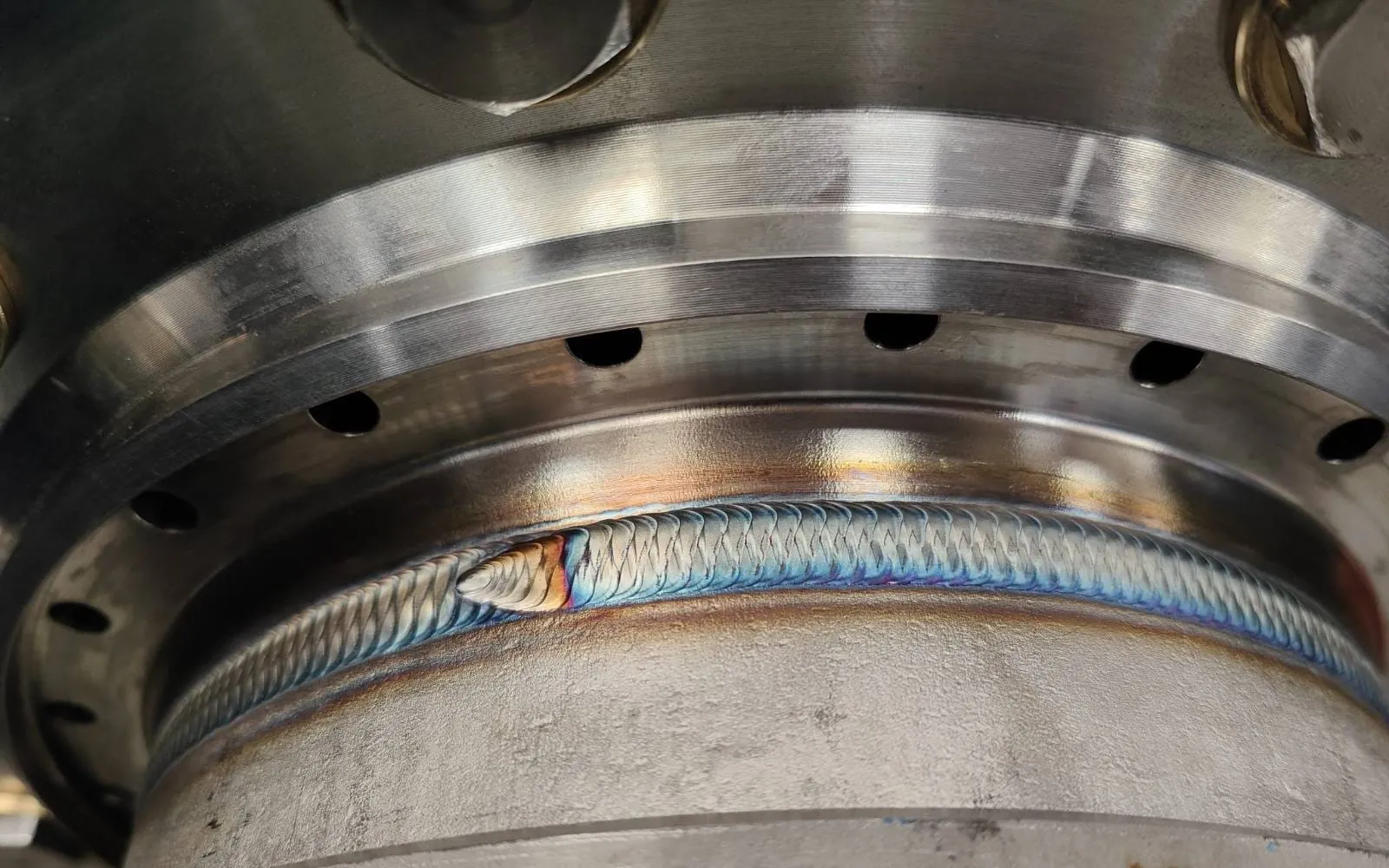
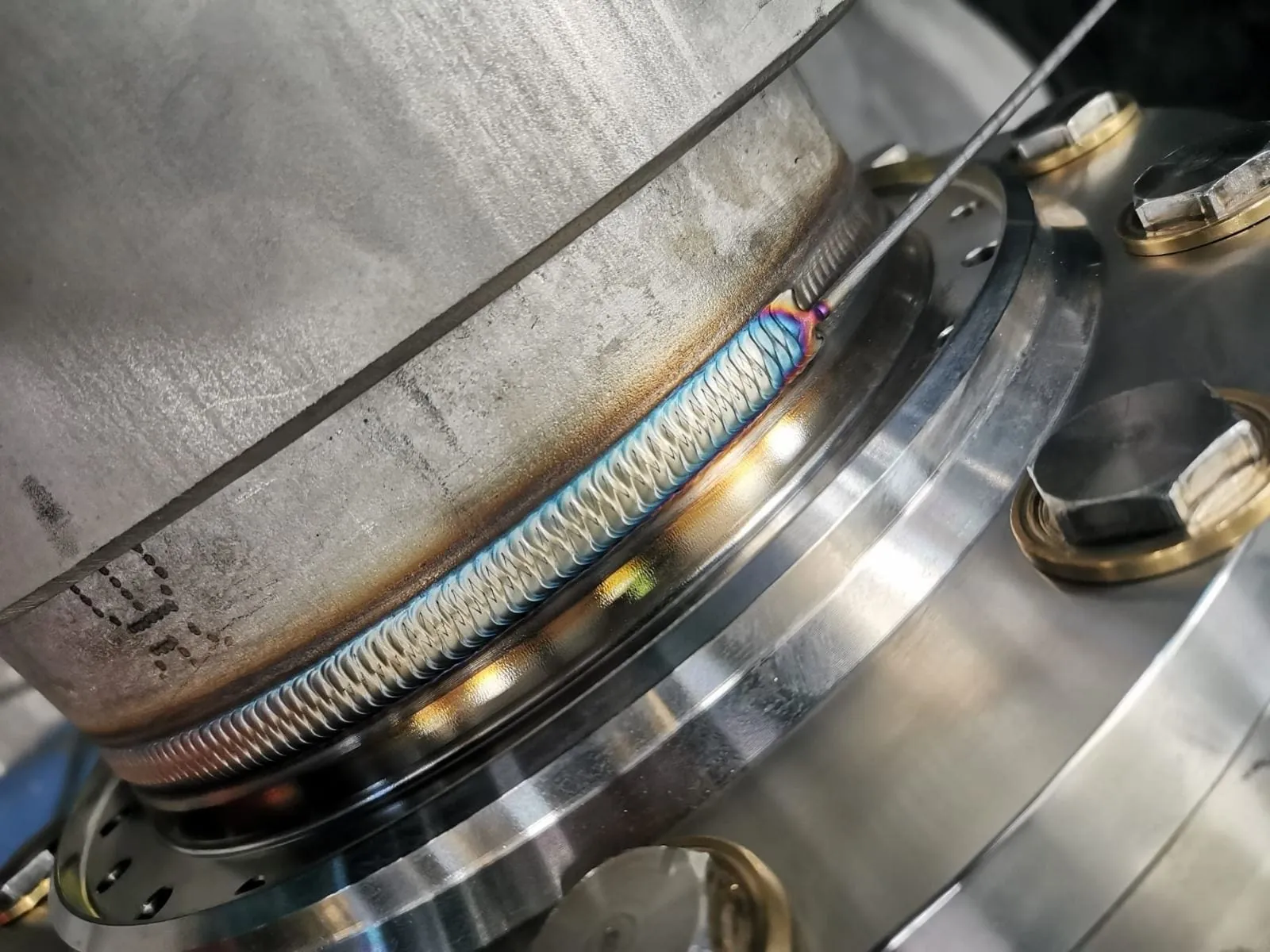
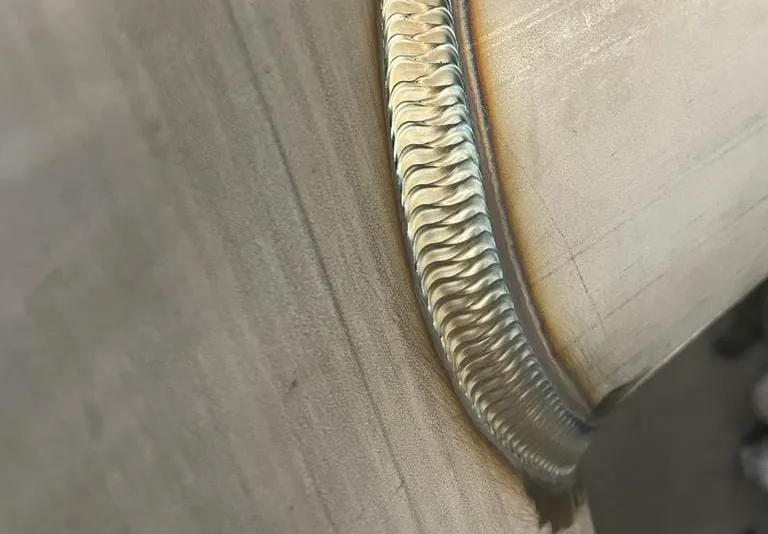
Workshop photographs
Examples of stainless joints
The photographs show the appearance of the joint; they are not a test report.
FAQ
Stainless steel welding — questions before a quotation
For a specific assembly, send the drawing with the material grade and finishing requirement.
Send a technical enquiry →Which stainless steels do you weld?
Mostly austenitic grades such as 1.4301 (AISI 304), 1.4307 (304L) and 1.4404 (316L). For other grades, state the material designation and application and we will confirm feasibility.
Do you remove heat tint?
State heat-tint removal and finishing requirements (brushing, grinding, pickling and passivation) in the enquiry. The method and the supplier are confirmed in the written quotation.
Can root shielding be specified?
Yes. For pipes and joints whose root side is in contact with the medium, gas root shielding is defined with the drawing and confirmed before quotation.
Do you fabricate for the food industry?
We fabricate items to the client’s documentation. Specific hygienic requirements, surface roughness and documentation must be stated in the enquiry and confirmed before the order.
Related services
The process follows the joint
One assembly often combines several processes and operations. The final scope is confirmed in the written quotation.
TIG welding (141)
Stainless steel, aluminium, copper and thinner walls; pipes and flanges where appearance and root control matter.
TIG welding →Pipe spool prefabrication
Pipe and metal assemblies prepared in the workshop, with dimensional checks before delivery.
Prefabrication →Aluminium welding
TIG welding of aluminium alloys with oxide removal and distortion control.
Aluminium welding →Next step
Send the drawing of your stainless item or pipe spool.
State the material grade, dimensions, root shielding and finishing requirements, quantity and lead time.